
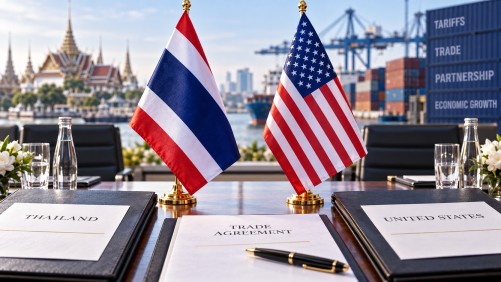
Thai exporters may soon see a more level playing field in the U.S. market as Thailand intensifies its efforts to secure a reciprocal trade agreement with the United States. This move aims to shield Thai exports from the threat of increased tariffs, offering greater market stability and competitiveness against regional counterparts like Malaysia and Indonesia.
Negotiations for the Agreement on Reciprocal Trade (ART) are ongoing, with Thai officials emphasizing the absence of a set deadline for its completion. Prime Minister Anutin Charnvirakul is anticipated to meet with U.S. President Donald Trump to further discuss the potential implications of existing and future tariff conditions.
Currently, Thai imports face a 12.5% tariff under a Section 301 measure, which is associated with goods produced through forced labor. Additionally, a U.S. inquiry initiated in March 2026 into structural excess production capacity raises concerns about the potential imposition of further duties on Thai exports. This investigation also examines other significant trading nations alongside Thailand.
In response, Thai authorities have submitted data to counter U.S. claims about excess production capacity and possible transshipment of goods. They argue that U.S. assessments undervalue Thailand’s production capabilities in key sectors, advocating for an updated evaluation by Washington.
The sought-after ART is expected to not only address tariff issues but also tackle U.S. apprehensions regarding trade barriers, investment, and market access in Thailand. While the final terms of the agreement are yet to be finalized, any concluded deal would still require ratification through Thailand’s domestic legislative process before becoming effective.