
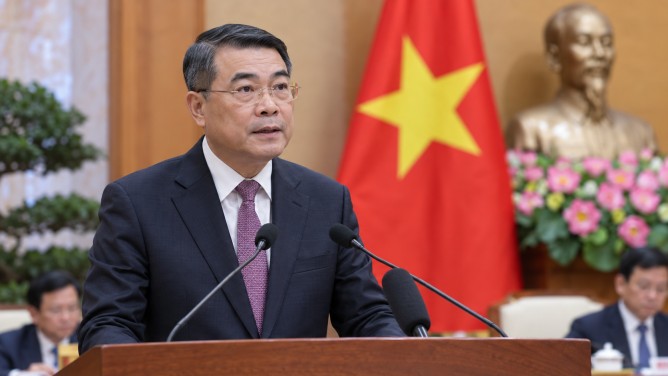
Vietnam has reaffirmed its commitment to strengthening strategic relations with Laos, emphasizing the need for enhanced economic collaboration and infrastructure connectivity. Vietnamese Prime Minister Lê Minh Hưng, during a meeting in Hanoi with Vilay Lakhamfong, a senior official of the Lao People’s Revolutionary Party, highlighted the importance of implementing bilateral agreements to deliver tangible benefits to both nations.
Prime Minister Hưng underscored Vietnam’s support for Laos’ development goals and outlined areas for expanded cooperation, including trade, investment, defense, security, education, science, technology, and tourism. He also called for active collaboration on regional and international matters through organizations such as the Association of Southeast Asian Nations (ASEAN) and the United Nations.
A key focus of the meeting was the acceleration of major infrastructure projects, notably the Hanoi–Vientiane expressway, the Vientiane–Vung Ang railway, and energy connectivity initiatives. Hưng also proposed advancements on the Laos–Vietnam Friendship University, highlighting the importance of educational collaboration.
Both countries reiterated their dedication to the Vietnam–Laos Cooperation Strategy for 2021–2030 and the bilateral governmental cooperation agreement for 2026–2030. Regular high-level exchanges and enhanced coordination between ministries, local authorities, and businesses were also emphasized as crucial for the ongoing partnership.
The discussions included preparations for the significant anniversaries in 2027, which will mark 65 years of diplomatic relations and the 50th anniversary of the Vietnam–Laos Treaty of Friendship and Cooperation. Planned activities for the Vietnam–Laos Year of Friendship and Strategic Cohesion 2027 aim to highlight the historic ties between the countries, with a focus on engaging younger generations.
Vilay Lakhamfong expressed gratitude for Vietnam’s support and reaffirmed Laos’ commitment to the bilateral relationship. He highlighted the continued need for coordination on regional security, stability, and economic development, reflecting both nations’ confidence that strengthened cooperation would enhance political trust and contribute to regional peace and stability.